Buy Once
Not Twice.

Plenty of floating docks look the same on a website. Most of them aren't built to survive what WA actually throws at them. Here's what's different about the one that is, and why that's worth paying for.

10 Years
Structural warranty. In writing, not in fine print.
Engineered
Block thickness. A deliberate spec, not a default one.
Modular
Reconfigurable as your boat and situation change.

Do It Right
The First Time.

Every dry dock on the market will tell you it's built for Australian conditions. Most of them are built to a spec sheet, shipped here, and hoped for.

The Fremantle Doctor doesn't read brochures. Neither does six months of WA summer UV, or a chop that doesn't really let up along the Mandurah canals. A dock that's a few millimetres thinner, made from a cheaper polymer grade, or sized to a generic average instead of your actual vessel will show it — not all at once, but slowly:

  • A bit of flex here.
  • A hairline crack there.
  • A block gone chalky and brittle by year three — doing the exact thing you bought a dock to get away from.

That's the cost nobody puts in the cheaper quote: you'll likely be back in the market for a new dock around the same time your FloatX dock would have paid itself off.

FloatX isn't the cheapest dry dock you can buy in WA, and it's not trying to be. It's priced to be the one you only have to buy once.
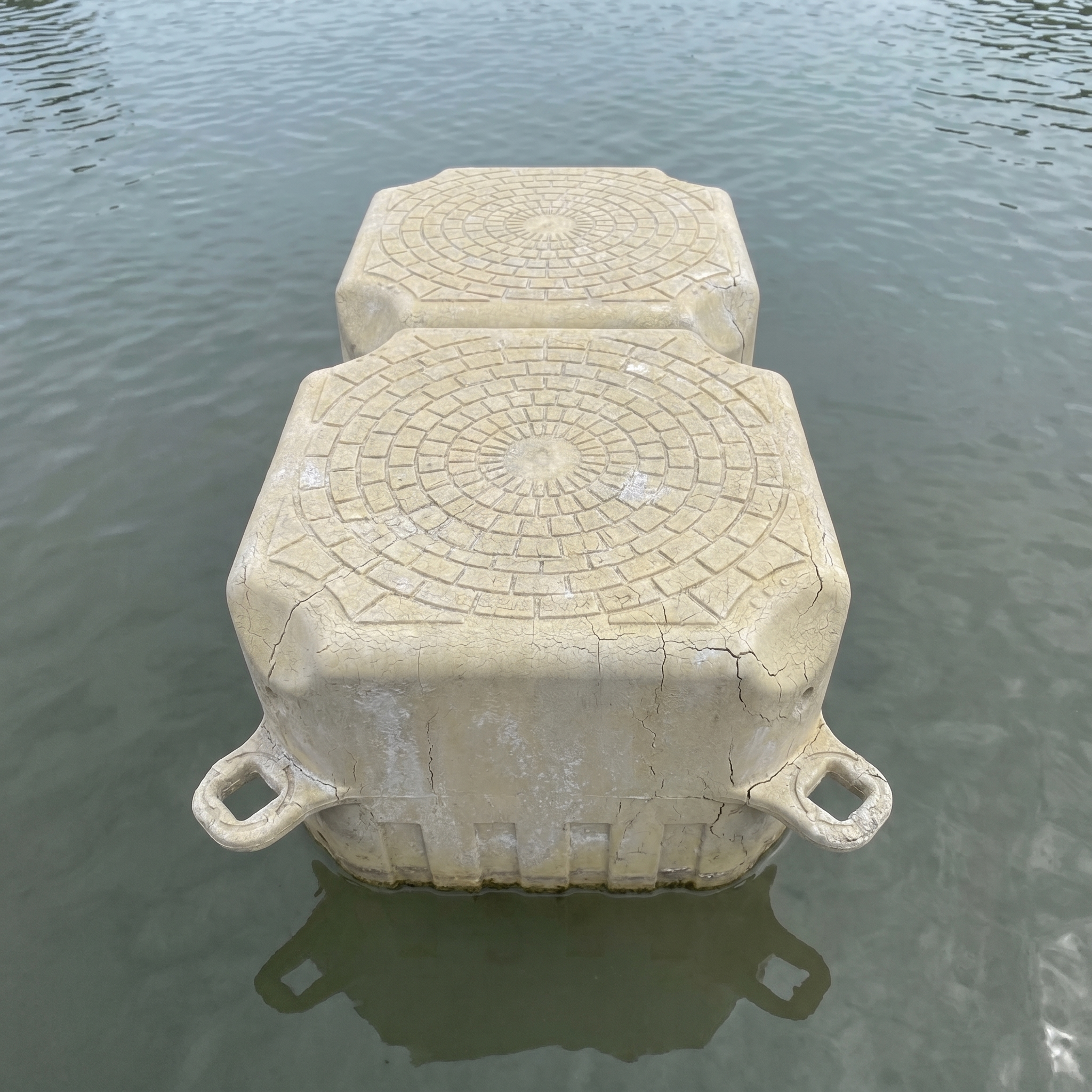
UV-degraded floating dock block showing surface crazing and hairline cracks after years in WA conditions

Engineered Thickness
On Purpose.

Every FloatX block is built to a thickness that isn't pulled from a catalogue. It's the point we landed on after weighing the two things that actually decide whether a dock survives a WA decade: strength and buoyancy.

  • Go thinner and you save weight, but give up the durability that lets a block shrug off ten years of UV, knocks, and WA heat without turning brittle.
  • Go thicker and you add strength you don't need, at the cost of the buoyancy and easy handling that make the system practical to fit and live with.

That's where those two requirements meet. Thick enough to take what a WA summer throws at it, year after year. Thin enough that the system stays balanced, buoyant, and straightforward to configure to your vessel. It's not a spec we chose for the sake of a catalogue entry. It's a large part of why a FloatX block is still doing its job long after a cheaper one has started to fail.

You Bought It to Use It.

Get a Quote →

Ten Years. No Fine Print.

What's Covered

Structural failure in the block itself, and genuine manufacturing defects, including UV degradation beyond what the materials are rated for. If it's our fault, we own it and replace it. That's what the ten years is for.

What Isn't

Damage from impact, misuse, or handling outside normal operation. If something's been put through what it wasn't built for, we'll tell you that too, the same way we'd want it told to us.

Precision Engineered Right Down to the Bolts.

Precision engineering usually gets talked about in terms of the parts you can see: the blocks, the deck, the way the whole system locks together. The parts that don't get talked about are the ones buried in every joint, holding it all in place. Every nut, bolt, washer and threaded rod is carrying real load every time the tide moves, the wind picks up, or several hundred kilos of boat settle onto the dock.

That hardware has one job: don't be the weak point. Most floating docks use 304 stainless because it's cheap, easy to source, and looks identical on the shelf. In WA's saltwater, it isn't identical at all.

FloatX uses 316 marine-grade stainless steel for every nut, bolt, washer and threaded rod in the system:

  • Added molybdenum earns 316 the "marine grade" name — the same reason it's the standard for fittings below the waterline on boats, not just docks.
  • Mill-certified to a tensile strength north of 500 MPa, holding its shape and grip under load.
  • No corrosion that quietly weakens cheaper hardware — a detail nobody inspects, until the day a cheaper dock's hardware doesn't hold.

With a FloatX dock, it's built to last as long as everything else does.

Get a Quote →

Boats Change So Can This.

Most floating docks are sized once, for one boat, and that's the end of the conversation. Upgrade to something bigger, move to a new mooring, or sell the boat on, and the dock you paid for becomes the dock you now have to replace.

FloatX is modular by design. The system is built from individual units that can be reconfigured, added to, or adjusted as your situation changes, not torn out and started again. A bigger boat next season means the dock can be reconfigured to suit it. A move to a different jetty or stretch of water means the same units can move with you.

You're not locking yourself into today's boat or today's plans. You're putting your money into a system that can change when you do.

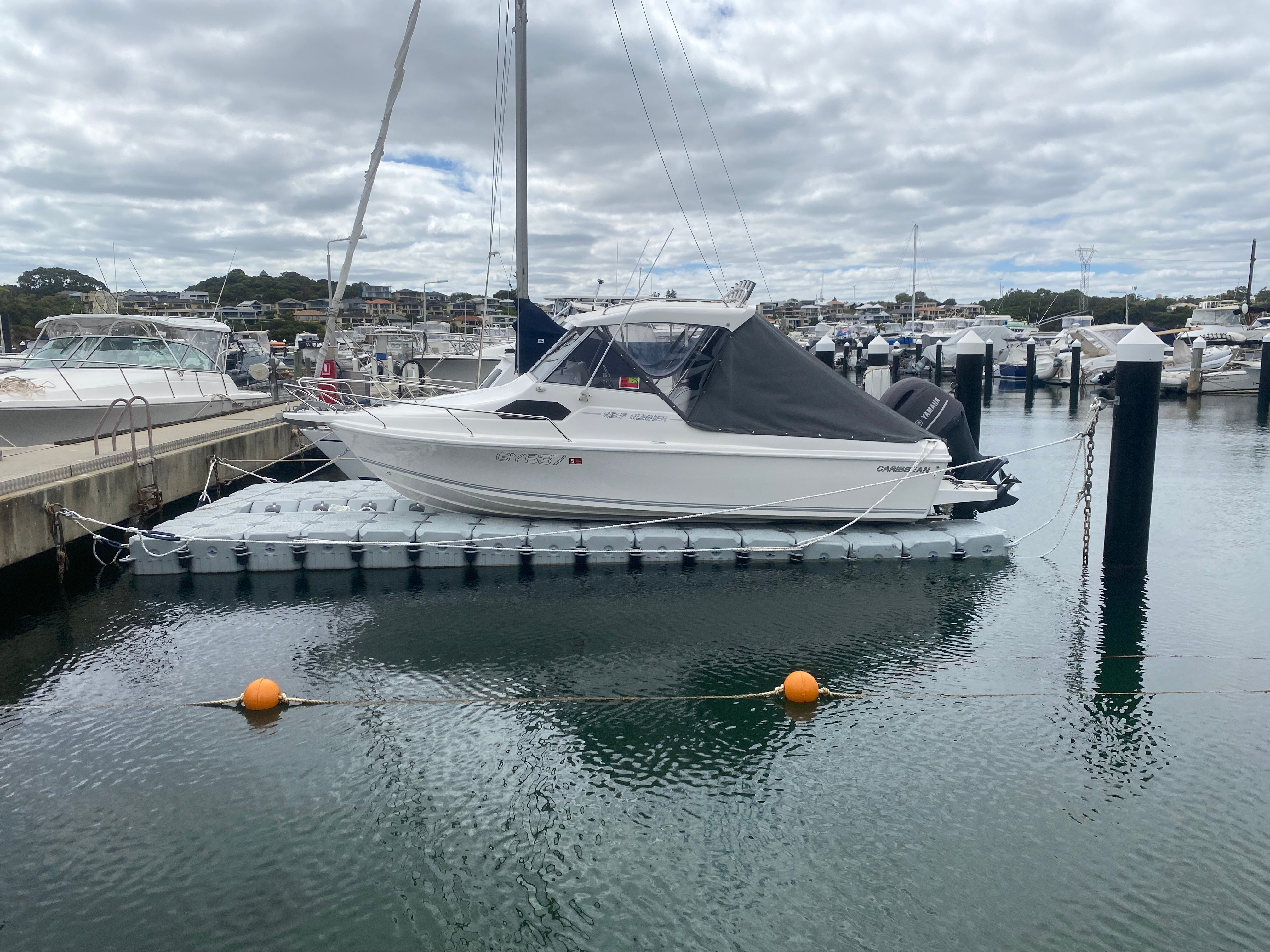
Boat sitting on FloatX floating dock at marina pen

New Airlift System Same Standard.

The FloatX airlift system is the newest part of the range, a dry-docking approach designed to bring the same dry-hull outcome to bigger, heavier vessels that the standard FloatX system already delivers for smaller ones.

It's new, so we won't claim ten years of WA seasons behind it. What it does have is the same engineering discipline as the rest of the range — built deliberately, tested before it touched the water, and backed fast, at our cost, if anything needs attention early on.

Still Weighing Up Something Cheaper?

That's a fair thing to be doing. The honest answer is that FloatX isn't the cheapest dry dock in WA, and it was never built to be.

It's built to still be doing its job in ten years, backed by a warranty that means what it says, on a system engineered for the conditions it actually has to survive. Tell us about your boat and your situation, and we'll put the real numbers in front of you so you can see exactly what you're choosing between.

Buy once. Not twice.

WA-based. WA-installed. No obligation. Just the numbers.